Shipping Container Roll-Up Doors
A roll-up door is the single most requested modification we quote. The reason is simple: the original cargo doors are two steel slabs that swing out several feet, and on a real site there is often nothing behind the container but a fence, a wall or another container.
A roll-up door solves that. It lifts straight into a header above the opening, so it needs no swing clearance at all, and it opens in one motion instead of unlatching four lock rods. If the container gets opened several times a day, that difference adds up fast.
Where the door goes
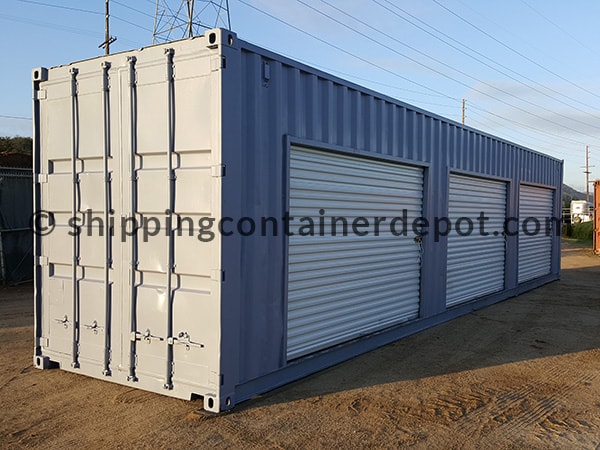
In the long side wall. The most common request. It turns the container into a walk-up unit you can load from the side without walking the length of the box, and it leaves the original cargo doors on the end intact for anything long.
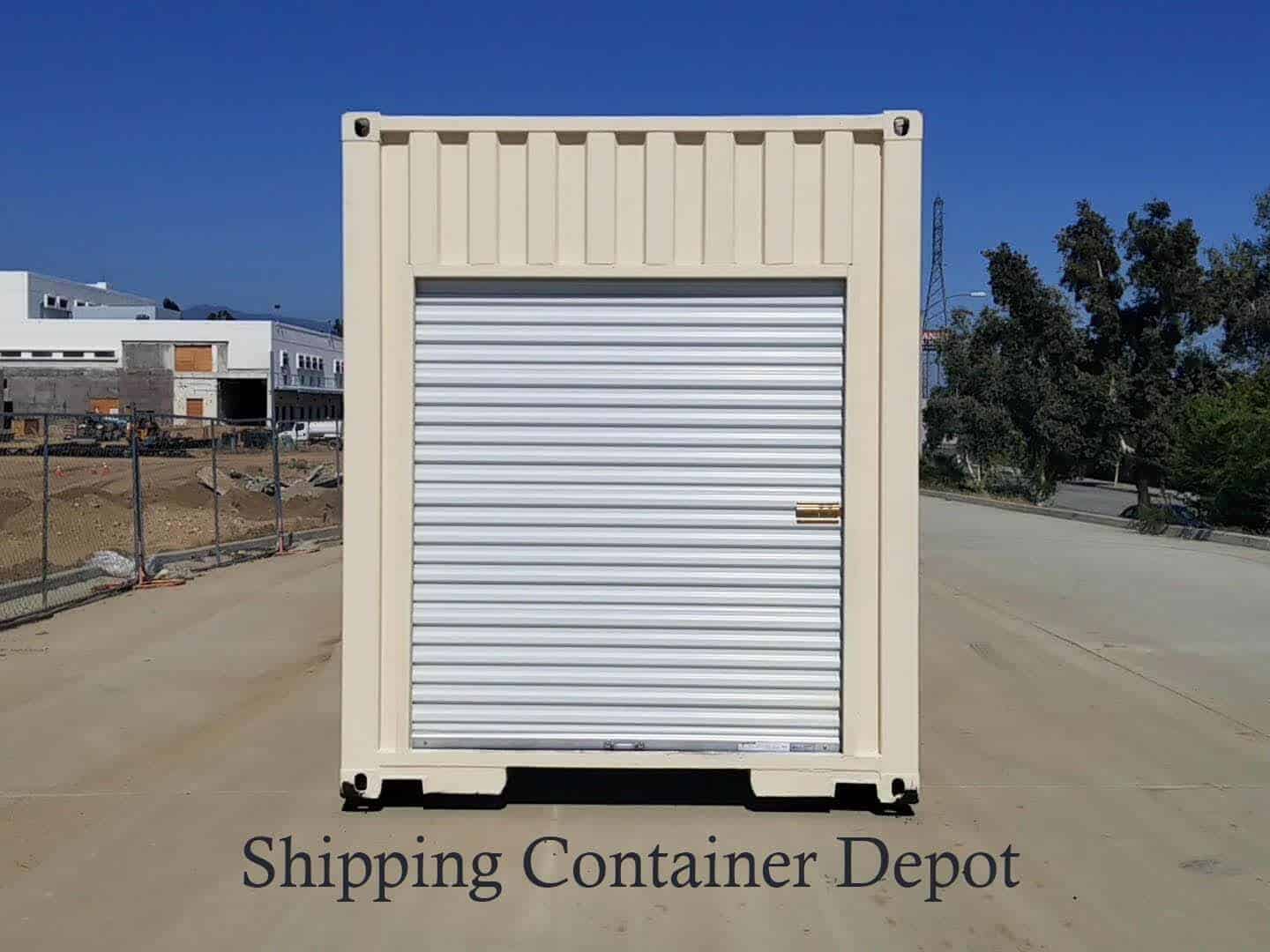
In the end, replacing the cargo doors. Chosen when the container will sit like a shed or a small shop and you want a clean single opening at the front. You give up the full-width cargo opening to get it.
Both. A side roll-up plus the original end doors gives you two ways in, which is usually what people mean when they say they want it to work like a garage.
Sizes and what limits them
Roll-up doors for containers are commonly specified somewhere between about 6ft and 10ft wide. Width is the easy part — the wall is 20ft or 40ft long, so there is room.
Height is where the constraint is. A standard container has roughly 7ft 10in of interior height, and the roll itself has to live somewhere above the opening. That header eats several inches, so the clear opening ends up shorter than the container is tall. If you need to drive a tall pallet jack or a small machine straight in, say so before the door is specified — a high cube container buys you a foot of extra height and is usually the right answer.
Roll-up door or swinging doors?
| Roll-up door | Swinging side doors | |
|---|---|---|
| Space needed in front | None — it goes straight up | Several feet of clear swing |
| Opening height | Reduced by the header the roll sits in | Full height of the framed opening |
| Speed of use | One motion, one lock | Four lock rods per pair of doors |
| Moving parts | Springs, track and drum — needs occasional service | Hinges and gaskets only |
| Weather seal | Good, but a swinging door with cam-lock gaskets seals tighter | Original-style gaskets, very tight |
| Best for | Tight sites, frequent daily access, garage-style use | Widest clear opening, forklift loading, long-term sealed storage |
If a full width opening matters more than the swing clearance, look at side doors and full open side conversions instead.
Cutting the wall is structural work
The corrugated side of a container is not cladding — it is a stressed skin that carries load and keeps the box square. Cut an opening in it and put nothing back, and the container racks out of true. Once it is out of true it stops sealing, and once it stops sealing it leaks.
So every roll-up opening gets a welded steel frame sized to the opening, and the door track and header mount to that frame rather than to the skin. Cut edges are primed and painted so they do not start rusting from inside the cut. A container with a large side opening also needs to sit level and be supported at all four corner castings — see delivery and site preparation.

What people combine it with
A roll-up door is rarely ordered on its own. The combinations we quote most often are:
- Roll-up + man door — the big door for loading, a normal personnel door for walking in without opening it.
- Roll-up + vents — a large door on a sealed steel box means more condensation, so vents are worth adding at the same time.
- Roll-up + lighting and electrical — if it is being used as a workshop or shop rather than dead storage.
- Roll-up + paint or logo — the usual finish when the container faces the street or a customer.
- Two roll-ups on one 40ft — effectively splits the container into two bays that can be used independently.
- double door and tunnel containers — cargo doors at both ends, so you can load straight through or split one container between two users.
All of these are on the container modifications page.
Common questions
Does a roll-up door weaken the container?
Not when the opening is framed. The welded frame restores the load path that the cut steel was carrying. Without a frame, yes — the container will rack and start to leak.
Can a container with a roll-up door still be shipped overseas?
No. A container loses its CSC plate once it is structurally modified, so it is no longer certified for international cargo. It can still be trucked and craned normally, which covers almost every use.
How wide can the door be?
Commonly between about 6ft and 10ft. Width is limited by how much wall you want to remove and by what the framing has to carry, not by the length of the container.
Why is the opening shorter than the container is tall?
Because the door has to roll up into a header above the opening, and that header takes several inches of headroom. A high cube gives you a foot more to work with.
Can you add a roll-up door to a container I already own?
Yes, if it is sound. Send photos of the walls, floor and roof and we will tell you honestly whether it is worth modifying or whether you are better off starting with a different container.
Is a roll-up door as secure as the cargo doors?
The original cargo doors with a lock box are the harder target. A roll-up door with a proper lockset and a welded frame is secure for normal site use, but if security is the top priority, keep the cargo doors and add the roll-up on the side instead of replacing them.
Does it still keep the rain out?
Yes. A roll-up seals well enough for storage. If the container will hold anything moisture sensitive, add vents or insulation — condensation, not the door, is what causes most damp problems inside a steel box.
Which container to start from
- 20ft containers — the usual base for a single roll-up.
- 40ft containers — room for two roll-ups, or one plus a man door.
- One-trip containers — straight walls make a cut opening finish cleanly.
- Used containers — fine to modify as long as the walls are straight and the frame is sound.
- Not sure what to call it? Conex box, connex box and shipping container all mean the same thing.
Tell us what you need
Give us the container size, where you want the door, roughly how wide, and the delivery zip code. We are based in Pasadena and deliver on our own trucks across Los Angeles and the rest of California.
Free Quote · No Obligation
Get a price for this container
Tell us where it is going and we will send you a delivered price. We have already filled in the size you were looking at — change it if you need something else.
"*" indicates required fields