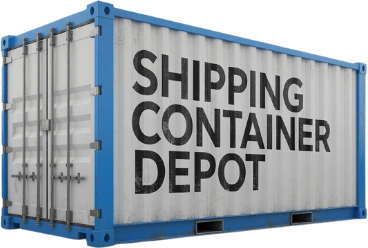

A shipping container used for storage does not always need a poured concrete foundation. What it does need is a firm, reasonably level, dry base that supports the container without twisting and that the delivery truck can reach. Concrete, asphalt, or well-compacted dirt may provide a suitable surface.
Soft dirt, a slope, or buried utilities can still stop a delivery or bind the doors. This guide compares dirt, gravel, blocks or pads, and a slab, then points you to a quote and our delivery page.
What Does a Shipping Container Foundation Mean for a Storage Drop?
A foundation for a standard storage container does not always mean a permanent concrete slab.
The main purpose of the base is to provide stable support beneath the container, particularly at its four bottom corner castings. If one corner settles, the frame can twist and the doors may become harder to close.
A suitable storage container base should address four practical concerns:
- Stability: The container should not rock or settle unevenly.
- Level support: The four corners should have consistent, secure support.
- Drainage: Water should not regularly collect beneath or around the container.
- Accessibility: The delivery truck must be able to reach the prepared location safely.
An unmodified storage container is different from a home, office, or permanent workshop. If you are planning substantial modifications or a permanent structure, discuss the foundation with a qualified local professional and check with your local building department.
This guide is general information for storage buyers, not engineering or legal advice.
Can You Put a Shipping Container on Dirt?
Yes, in some situations. A shipping container can be placed on dirt when the ground is firm, reasonably level, dry, and suitable for the intended placement. Not every dirt surface qualifies.
A compacted equipment yard that vehicles use regularly is different from a recently landscaped backyard. An existing dirt area may work if the surface is well packed, has no obvious soft spots, and does not regularly collect standing water.
Look at the surrounding ground, not only the drop spot. Your intended location may be dry and firm, but the truck might still need to cross a soft section to reach it. A lawn can look firm when you walk across it, but that does not mean it can support a loaded delivery truck or hold a container steadily. Recent rain, irrigation, and freshly filled ground are reasons to take a closer look. If you are unsure, send us photographs of the drop spot and the access route before arranging delivery.
Gravel, Blocks, and Concrete Pads
Gravel can be a practical option where exposed dirt becomes muddy or water collects around the proposed placement. Spreading gravel over unsuitable soil does not automatically make the ground suitable; the condition of the ground beneath it still matters.
Concrete blocks, pavers, and railroad ties are common options when placing a container on dirt. Supports beneath the four corners can help raise the lower frame above wet ground and assist with leveling.
Individual concrete pads give defined support points without installing concrete across the entire container footprint. Discuss the arrangement with our delivery team before installing the pads, so the unloading method can work with the finished base.
Shipping container foundation options compared
| Base type | When to consider it | What to watch for |
|---|---|---|
| Compacted dirt | Existing firm, dry, reasonably level storage areas | Soft spots, rain, and access conditions |
| Gravel | When you want to discuss improving an exposed dirt area | The condition of the ground beneath it |
| Blocks, ties, or concrete pads | When separate corner supports are being considered | Whether the proposed support is suitable for the site |
| Concrete slab | Longer-term installations or more involved projects | Ground conditions, drainage, structural requirements, and delivery access |
Whichever base you are considering, send us photos of the spot and we’ll tell you whether it looks workable.
When a Concrete Slab Might Be Worth Considering
A concrete slab may be worth considering if you intend to keep the container in one location for an extended period, or place it on ground that does not remain firm and level. A slab is not automatically necessary for ordinary storage, and it does not remove the need to consider the underlying site and the delivery approach.
For a workshop, garden shed, or other modified space, see our shipping container shed ideas.
Slope, Drainage, and Southern California Ground Conditions
A storage location that stays dry in summer may behave differently after heavy rain.
A sloped property does not necessarily prevent a purchase, but the placement needs more attention. Look at the elevation difference between the four corners; a surface that looks nearly level from one direction may slope from the side. If the site has a significant slope or large differences in corner height, discuss the placement with our team before delivery. Our delivery and site readiness guide explains the access considerations to review with us.
Before choosing a location, observe what happens after rainfall or irrigation. Water may collect near a retaining wall, or the ground may stay wet after nearby areas have dried. A different location may be more practical than trying to fix several ground problems.
Buried irrigation lines, septic systems, pool plumbing, and other underground infrastructure can affect placement and truck access. If you know about any of these near the proposed location, tell us before arranging delivery.
Shipping container ground preparation before ordering
Before committing to a foundation, note the existing surface, any slope or drainage concerns, and take photographs of the location and access route. Our team can review the photographs and discuss whether the delivery setup looks workable.
Leave Room for the Delivery Truck
A suitable foundation is only useful if the delivery truck can reach it. Our shipping container delivery guide provides these general planning figures for standard deliveries:
| Access requirement | General delivery guidance |
|---|---|
| Straight run for a 20ft container | About 60 ft |
| Straight run for a 40ft container | About 100–120 ft |
| Overhead clearance along the route | About 14 ft |
| Overhead clearance at the drop spot | About 16 ft |
These are general planning figures and can vary with the truck, unloading method, and site.
If driveway or yard space is tight, a 10ft shipping container may fit better than a larger unit.
Delivery is typically 3–7 business days across Southern California on our own trucks.
Starting Prices for the Container, Not the Foundation
Here are our starting prices for 20ft and 40ft containers.
| Size and condition | Starting price |
|---|---|
| 20ft standard wind and water tight (WWT), used | Starting at $1,536 — Call us for the best price |
| 40ft standard WWT, used | Starting at $1,848 — Call us for the best price |
These are starting prices for the container only, before delivery and any site preparation. Delivery is quoted to your ZIP code.
Explore our 20ft shipping containers for sale and 40ft shipping containers for sale, or buy direct from Shipping Container Depot. For storage-focused purchases, see our used shipping containers for sale.
Frequently Asked Questions
Do you need a foundation for a shipping container?
Not necessarily a poured concrete foundation. For standard storage, a firm, reasonably level, dry surface with support under the corners may be enough.
Can you put a shipping container on dirt in Southern California?
Yes, depending on the ground. Well-compacted, dry dirt may be suitable, while soft soil, recently disturbed ground, and wet lawns need a closer look. Send us photographs before arranging delivery.
Are concrete pads or blocks enough for a shipping container?
They can be on firm ground. Pads or blocks under the four corners are a common approach on dirt sites, but how many, what size, and what is underneath depend on your site. Send photos and we will tell you whether it looks workable.
Does the ground need to be perfectly level?
It does not need to be a finished concrete floor, but the container needs stable, reasonably level support. Discuss significant slopes or corner-height differences with us before delivery.
Can I place a shipping container on an existing driveway?
A concrete or asphalt driveway may be suitable, depending on its condition and whether the delivery truck can use it. Tell us about recent paving work, underground utilities, slopes, and any visible surface damage before booking.
Get a Quote for Your Shipping Container
You may already have a suitable location. When requesting a quote, tell us:
- Container size (20ft or 40ft) and your delivery ZIP code.
- What the ground is (dirt, gravel, driveway, slope) and any known drainage, utility, or access concerns.
- Photos of the drop spot and the route in.
Shipping Container Depot is a family-owned business based in Pasadena, California, established in 2010. You can buy direct, with delivery typically taking 3–7 business days on our own trucks.
We offer a 3-year Fix or Replace Warranty.
Get a free quote or review our delivery and site preparation guide.
Call us at (626) 765-9446.
Business hours (Pacific Time):
- Monday–Friday: 8am–5pm
- Saturday: 9am–3pm
- Sunday: Closed
Call us for the best price.
Free Quote · No Obligation
Ready for a real number?
Tell us the size you want and where it is going, and we will send you a delivered price.
"*" indicates required fields